Experience the cotton-white travertines, a masterpiece of nature, and the mystical atmosphere of the sacred Roman city Hierapolis together.
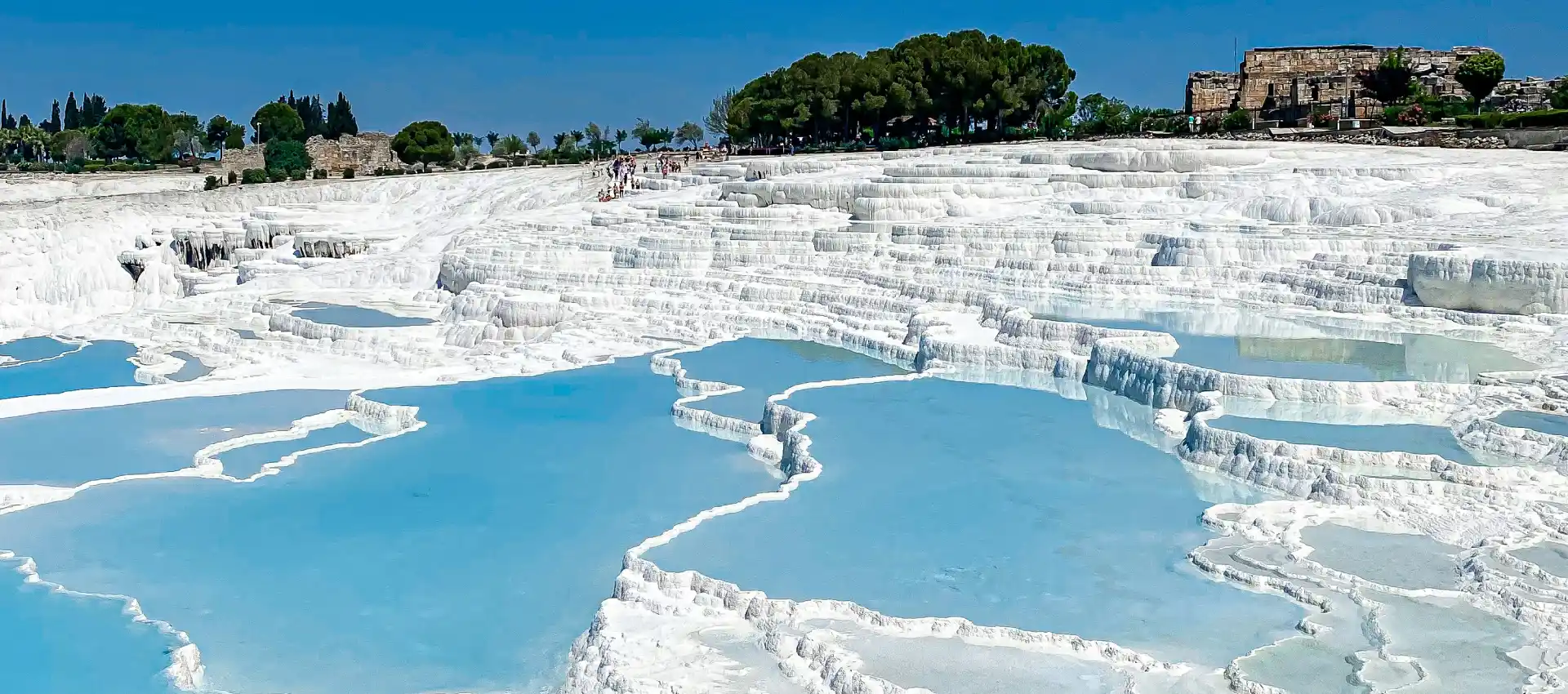
Pamukkale is one of the world's most unique natural sites, featuring travertine terraces formed by the hardening of calcium carbonate accumulated over thousands of years due to geothermal activities. Being one of the rare areas protected by UNESCO under both natural and cultural heritage criteria has made Pamukkale a major scientific and touristic value on an international scale.
Located directly above the travertines, the Ancient City of Hierapolis was founded in the 2nd century BC by the Kingdom of Pergamon and developed as a thermal health center during the Roman Empire. Ancient sources record that the region's healing thermal waters were used for rheumatism, joint diseases, and skin ailments. In this respect, Hierapolis became one of the most well-known spa and rehabilitation cities of the ancient world.
The city's religious importance is also very high. According to Christian tradition, the martyrdom of Saint Philip, one of the apostles of Jesus, here made Hierapolis an important pilgrimage center in early Christian history. The Martyrium of Saint Philip, unearthed as a result of archaeological excavations, is the most concrete proof of this belief.
Today, Pamukkale and Hierapolis are both research areas for scientists due to their geological structure and popular destinations for history and cultural tourism due to their archaeological richness. As Destina Transfer, we provide a safe, comfortable, and professional transportation service to Pamukkale from Izmir, Aydin, Denizli, and many points in the Aegean Region to ensure you make the most of your visit.
Foundation of Hierapolis by King Eumenes II of Pergamon; the region begins to gain importance as a thermal health center.
Large-scale reconstruction of the city by Roman Emperor Tiberius following a major earthquake in the region.
Martyrdom of Apostle Philip in Hierapolis and the city becoming an important center in Christian history.
The Golden Age of Hierapolis under Roman rule; the city reaches its most brilliant period with the theater, agora, baths, and monumental structures.
With Christianity becoming the official religion, the city positions itself as a strong bishopric center.
Acceptance of Pamukkale and Hierapolis into the UNESCO World Heritage List; gaining international protection status.
The cotton-white terraces formed over thousands of years by thermal waters are Pamukkale's most iconic sight. Visitors can walk in these healing waters in designated areas.
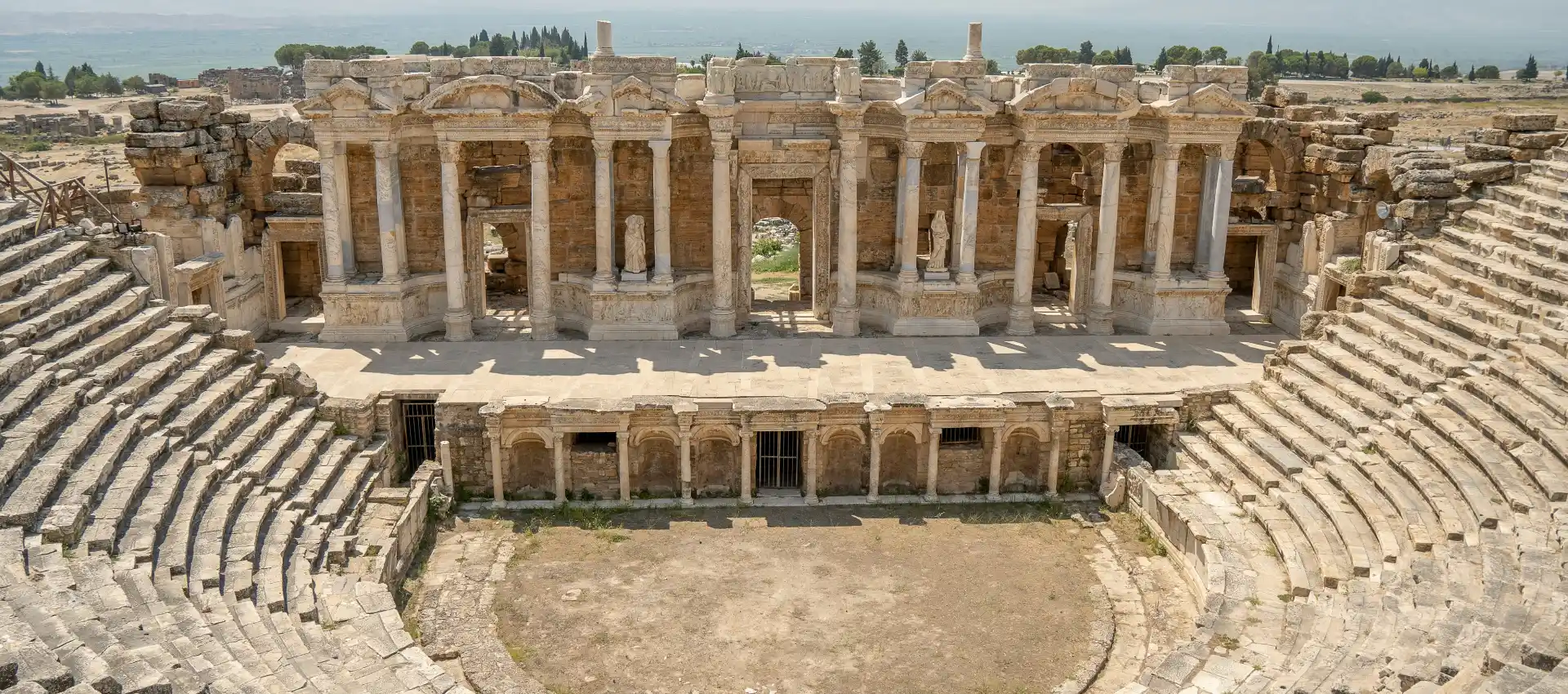
This massive structure with a capacity of about 15,000 spectators is one of the best-preserved ancient theaters in Anatolia. The mythological reliefs in the stage building are eye-catching.
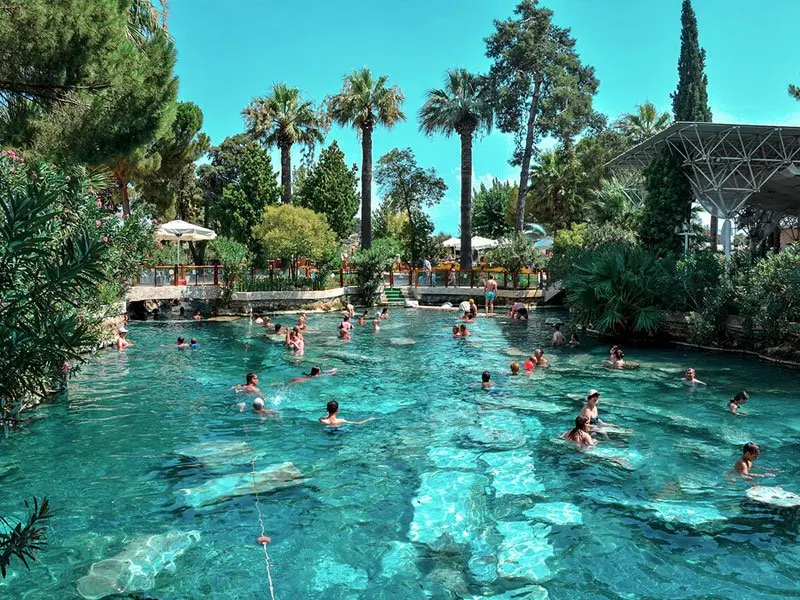
Swimming in 36°C healing thermal water among ancient columns toppled by an earthquake in this unique pool is an unforgettable experience.
Spring and autumn months are ideal in terms of both weather conditions and crowd density.
You should allocate at least 4-5 hours to visit both the travertines and Hierapolis. **With Destina Transfer's flexible tour programs, you can travel without worrying about time.**
You will need to remove your shoes to walk on the travertines. Don't forget to bring swimwear and a towel for the Cleopatra Pool.
**As Destina Transfer, we arrange licensed tour guides for you upon request to make your trip more meaningful.**
"Fantastic service. The driver was very helpful and the vehicle was spotless. Highly recommended for airport pickups and private trips around Ephesus."
"The driver was very kind, helped with luggage and kept us company. Even in heavy rain, he drove very carefully. Great service!"
"A very respectful and comfortable journey. The driver informed me about the arrival time beforehand, which made the trip stress-free. Thank you Destina!"